Asia's Premier High-Altitude Ski Destination
Rated Asia's 5th best ski destination, Gulmarg offers over 30 kilometers of continuous runs, stretching from gentle, pine-sheltered nursery slopes to the high-alpine ridges of Mount Apharwat.
Why Gulmarg? (Heritage & Himalayan Powder)
Located at an altitude of 8,750 feet in the Pir Panjal range of the Western Himalayas, Gulmarg has a storied past. Historically celebrated as a favored summer destination of Mughal Emperor Jahangir and later developed as an alpine retreat by the British, it is now the ski capital of India.
What makes skiing in Gulmarg unique globally is its combination of maritime storm systems from Central Asia colliding with the cold, dry continental air of the high Himalayas. The result is exceptionally dry, light “curry powder” that rarely crusts over, offering effortless flotation for beginners learning edge control and deep-snow bliss for advanced riders.
While global freeride films showcase Mount Apharwat's steep 50° couloirs, the base valley is flat, forgiving, and sheltered by towering deodars and blue pines, making it one of the safest and most economical places in the world to learn the sport.
Understanding the Slopes: 4 Lift Zones & The Backcountry
Click any image to open it fullscreen. You can zoom and scroll to inspect route and terrain details.
Zone 1: The Valley Basin & Poma Slopes (2,650 m / 8,690 ft)
Terrain Profile: 7 Poma surface lifts operate around the Gulmarg town bowl and golf course perimeter. These slopes are regularly groomed, wide, and naturally contoured with gentle gradients.
Rider Level: Absolute beginners, children, and novices practicing balance, snowplow mechanics, and turning.
Local Tip: Because these are the prime learning slopes, they can get busy mid-morning; early sessions between 9:00 AM and 11:00 AM offer the best groomed snow.
Zone 2: Phase 1, Kongdoori Meadow (3,050 m / 10,000 ft)
Terrain Profile: Accessible via a 9-minute ride on the Gulmarg Gondola. Kongdoori offers roughly 400 vertical meters of wide, naturally graded, undulating alpine terrain bordered by pine forests.
Rider Level: Beginner and intermediate. With just 2 to 3 days of foundational instruction on the base slopes, learners get the skills needed to ride Phase 1.
Storm-Day Advantage: When high-altitude blizzard winds temporarily pause the upper cable car, Phase 1 remains sheltered by the tree line, providing safe visibility and continuous tree laps.
Zone 3: Mary's Shoulder Chairlift (3,500 m / 11,480 ft)
Terrain Profile: Located directly above the Kongdoori mid-station, this modern quad chairlift delivers around 450 meters of chairlift vertical rise (or up to 850 meters of continuous descent back to the valley base). It accesses wide-open, powder-filled natural bowls
Rider Level: Intermediates ready for their first deep-powder turns, up to advanced riders doing quick off-piste laps.
Convenience: A narrow, regularly groomed trail funnels riders straight back down to the gondola and chairlift base to ensure a comfortable return.
Zone 4: Phase 2, Apharwat Ridge & The High Alpine (3,980 m / 13,058 ft)
Terrain Profile: The second stage of the Gondola climbs above the tree line to Asia's highest cable car terminal. It unlocks massive glacial powder bowls and rolling alpine faces and traverses toward frozen Alpather Lake.
Rider Level: Advanced to expert skiers only. High-altitude conditions require solid off-piste technique, physical stamina, and proper avalanche safety equipment.
The Backcountry: Summit, Shark Fin & Drung Valley (Up to 4,390 m)
Terrain Profile: Beyond the lifted terrain, spurs and bowls stream north and south off Mount Apharwat. Descending south takes you over 1,500 vertical meters through virgin powder down to the frozen riverbeds of Drung Valley.
Safety Requirement: While Phase 1 and designated Phase 2 runs are avalanche-monitored, all off-piste backcountry routes require an experienced, certified local guide.
How the Learning Curve Works (A Full Roadmap)
Days 1–2: The Foundation (Valley Floor & Poma Lifts)
- Get fitted with boots and skis at the ski shop.
- Learn how to glide, stop in a wedge (snowplow), and ride surface Poma lifts independently.
- Practice gentle wedge turns and learn speed control on the bunny slopes.
Days 3–4: Linking Turns & Gaining Confidence
- Move from a wide snowplow to stem Christie turns, where the skis are parallel at the end of every turn.
- Ascend the Phase 1 Gondola to Kongdoori (3,050 m) to experience real alpine mountain cruising.
- Build muscle memory and rhythm on wide, naturally graded 400-meter vertical descents.
Days 5–7: Parallel Skiing & Variable Snow
- Make confident parallel turns on groomed slopes.
- Explore soft, ungroomed powder off the edges of the trail.
- Lap Mary's Shoulder chairlift to build off-piste confidence.
What to Bring vs. What to Rent
What to Rent On-Site (Available at our Ski Shop):
- Carving & Powder Skis: Beginner skis tuned for easy turning; 105mm+ wide powder skis for deep snow.
- Ski Boots & Poles: Professional alpine boots fitted to your calf and foot width, plus lightweight poles.
- Ski outerwear: Waterproof ski jacket and pants (minimum 10,000 mm waterproof rating), waterproof insulated ski gloves or mittens, and UV-blocking ski goggles (Category 2 or 3 lenses for variable mountain light).
- Helmets & Avalanche Kits: CE-certified ski helmets, plus digital transceivers, probes, and shovels for Phase 2 riders.
What to Pack With You:
- Synthetic or merino wool thermal base layers (avoid cotton, which retains sweat and freezes).
- Neck gaiter/balaclava and specialized ski or high-quality woollen socks.
- Broad-spectrum SPF lip balm and sunscreen to protect against high-altitude UV reflection.
- Warm, comfortable clothing and shoes to wear off slopes.
Season Calendar: When Should You Ski?
December 15 to January 10 (Early Season & Cold Groomers)
The mountain opens, base depths establish, and crowds are low. Great for beginner skiing on the valley floor and crisp, uncrowded groomers.
January 10 to February 28 (Peak Himalayan Powder)
Frequent Western Disturbances drop deep, dry snow cycles across the Pir Panjal. Ideal for powder hounds, Mary's Shoulder laps, and tree skiing.
March 1 to April 10 (Spring Sunshine & Alpine Touring)
Warmer bluebird days, stable snowpacks, and pleasant temperatures. Excellent for families learning to ski without sub-zero temperatures, as well as high-alpine backcountry touring up to Shark Fin.
Recommended Ski Packages
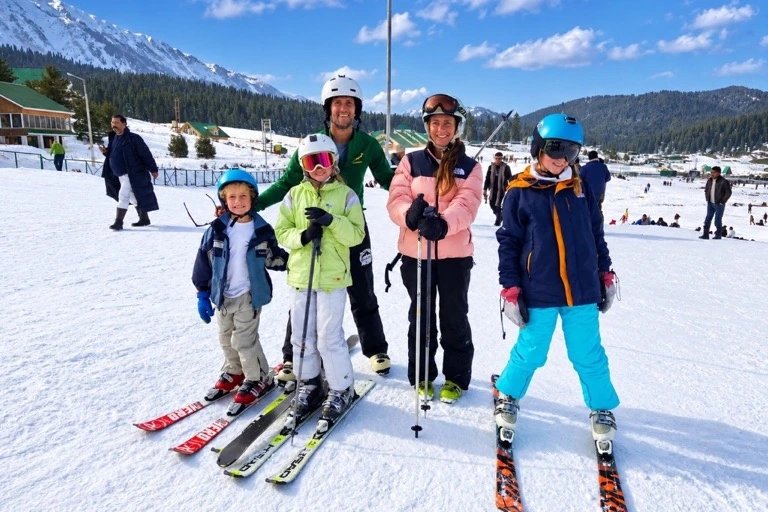
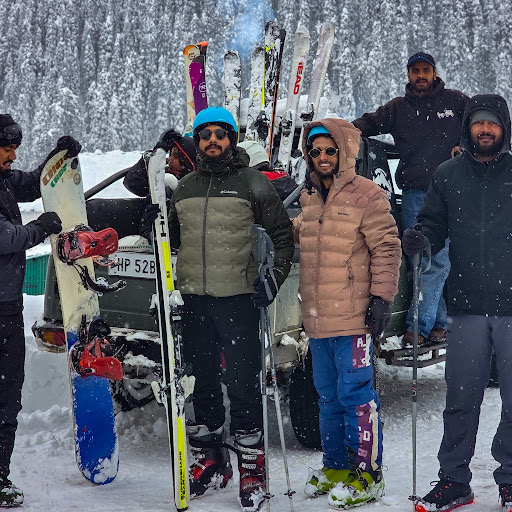
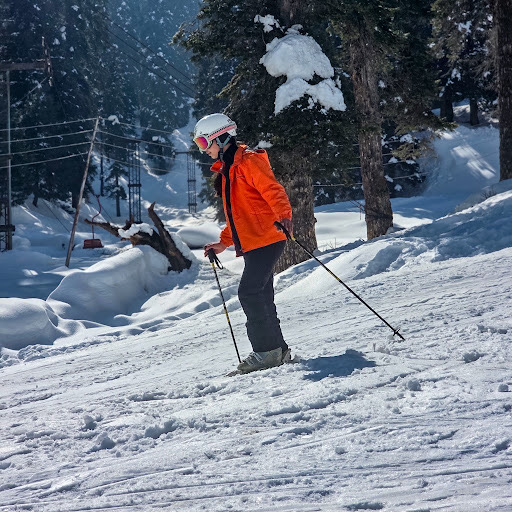
Ready to Learn or Ride Mount Apharwat?
Speak directly with our mountain instructors to plan your lesson dates, arrange rental sizing, or customize your stay.
Slopes & Powder
From nursery slopes to Mount Apharwat: certified ski instruction, Himalayan powder guiding, full gear hire, and lift access across Gulmarg's four lift zones.
Frequently Asked Questions (Skiing)
Practical answers for first-time and returning skiers planning a Gulmarg trip.
Gulmarg is significantly more affordable. Equipment rentals, private 1:1 ski instruction, lift tickets, and ski-in/ski-out hotel stays are a fraction of the cost of the Alps or North America, making it an accessible place to learn.
Yes. Children as young as 5 can learn comfortably on the nursery slopes around the Golf Course, guided by local instructors experienced with young learners.
Phase 2 closes during severe storms for avalanche mitigation, but the lower slopes, Poma lifts, and Phase 1 tree runs remain accessible, meaning beginner lessons and storm-day powder tree skiing continue uninterrupted.